Phone:
(701)814-6992
Physical address:
6296 Donnelly Plaza
Ratkeville, Bahamas.

Phone:
(701)814-6992
Physical address:
6296 Donnelly Plaza
Ratkeville, Bahamas.
Disclosure: Laika’s World is reader-supported. Some links in this post go to retailers like Amazon and Chewy. We don’t earn a commission on them yet, and we never let that shape what we recommend.
A puppy arriving in the last week of December is the best Christmas present in the house — and the one most likely to be followed, within 48 hours, by a 2 a.m. trip to the garden in the rain, a puddle on the rug, and a panicked search for the vet’s phone number. None of that is a disaster. All of it is easier if the shopping is done before pickup day, because the first week with a puppy is not a shopping week. It is a routine week, and the routine starts the moment the puppy walks through the door.
This checklist is split the way a first week actually runs: what to buy before pickup day, what can honestly wait, the routine that keeps the week calm, and what the whole thing costs. Buy the first list. Leave the second list alone until you know your puppy.
These seven things should be in the house before the puppy arrives. Everything else is optional.
1. A crate with a divider. This is the single most important purchase on the list, and the one people most often get wrong by buying too small. Buy the adult size for your dog’s breed, with a divider panel, and shrink the space down to puppy size. A crate that is too big lets the puppy toilet in one corner and sleep in the other, which defeats the whole point; a divider fixes that, and you slide it back as the puppy grows. Our full guide to choosing the right dog crate covers sizing by breed — How to Choose the Right Dog Crate (Size Chart + Best Crates for 2026) — but the short version is: measure the adult dog, add a few inches, buy once. The pick from that guide is the MidWest iCrate Double Door, and the 42-inch is the right first crate for most medium and large breeds.
Put the crate in your bedroom for the first few nights. A puppy that has just left its mother and littermates will cry — that is normal, and it settles in three to five nights for most puppies. A crate next to your bed, where the puppy can hear you breathe, shortens that to the low end of the range. A crate downstairs in a cold kitchen lengthens it.
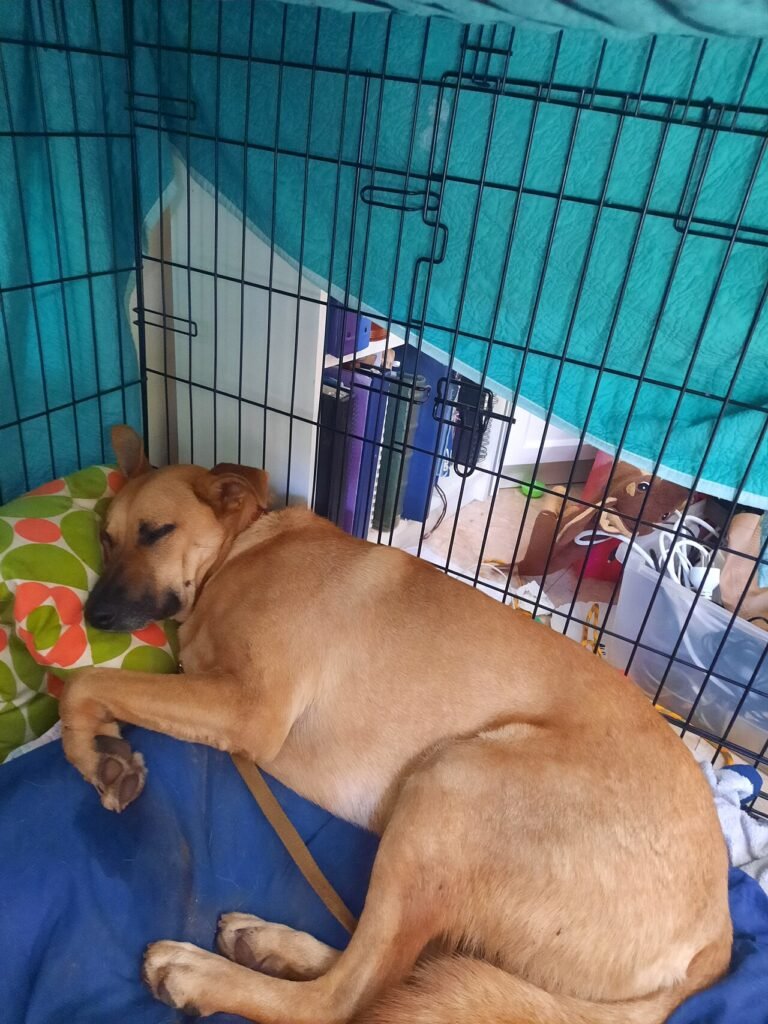
2. A washable bed. One bed for inside the crate, washable, because it will be washed — more than once, in the first week. Do not buy the expensive orthopedic bed yet. Buy the cheap washable one now, and buy the good bed once you know where the puppy actually likes to sleep and how fast it chews through things. If your puppy is a chewer, skip the plush bed in the crate for the first weeks and use a folded towel instead; a puppy that eats bedding ends up at the vet, and a towel is a cheaper lesson. Our heated beds guide covers self-warming pads, which are the safe option for a crate — never a plug-in heated pad in a crate with a chewer.
3. The breeder’s food — the same bag, not a better one. This is the item new owners most often “upgrade” on day one, and it is the one upgrade that reliably causes diarrhea. A puppy’s stomach is dealing with a new home, new people, new sounds, and new water all at once. Do not add a new diet to that list. Buy a small bag of exactly what the breeder or shelter has been feeding, and feed that for at least the first week. If you want to switch foods, do it after the first vet visit, over seven to ten days, mixing the old and new food in shifting proportions. A small bag is the right size on purpose: if the switch goes ahead you will not be stuck with a large bag of the old food, and if the puppy turns out to need a different formula, you find out cheaply.
4. Two stainless steel bowls. One for food, one for water, stainless steel, non-tip if your puppy is enthusiastic. Stainless steel is the boring right answer: it does not harbor bacteria the way scratched plastic does, it survives being dropped, and it goes in the dishwasher. Put the water bowl where the puppy can always reach it, and wash both bowls daily — a puppy’s water bowl grows a film faster than you would expect.
5. A collar and an ID tag. An adjustable nylon collar, fitted so two fingers slide underneath, plus a tag with your phone number on it — not the puppy’s name, your number. A tag is the cheapest insurance in this whole list: a puppy that slips out of the garden in week one is a puppy with no recall and no road sense, and a tag is what gets it back. Check the fit every few days in the first month; puppies grow fast enough that a collar that fit on pickup day can be tight by the end of the month. The microchip is the permanent backup — see the routine section below — but a tag is what a neighbor actually reads.
6. An enzymatic cleaner. You will use this in the first week. Probably on the first day. Buy it before you need it, not after the first accident, because the second accident usually follows the first within the hour, and the cleaner is what stops the third. Ordinary cleaners mask the smell for you; an enzymatic cleaner breaks down the urine itself, which is what stops the puppy from returning to the same spot by scent. This is the cheapest item on the list and the one that saves the most carpet.
7. Two or three starter toys — and one of them should be a KONG Puppy. Puppies teethe, and a teething puppy without something legal to chew will chew something illegal: a shoe, a chair leg, a phone cable. Two or three toys is enough to start; you will learn quickly which kind your puppy actually likes, and that is when you buy more. The one to buy first is the KONG Puppy — softer rubber than the adult KONG, made for puppy teeth, and it doubles as a pacifier when stuffed with a little kibble or plain yogurt and frozen. Stuff it, freeze it, hand it over when you need twenty quiet minutes.
Puppy pads belong on this list too if you are in an apartment or it is the middle of winter — a pack of pads by the back door for the nights when the garden is frozen and the puppy is small. They are a bridge, not a plan: the goal is still outside every time, and pads come out of the routine as soon as the puppy can hold it a little longer.
Just as important as the buy list is the wait list. Pet shops are designed to make you buy all of this on day one. None of it is needed in week one.
A harness. Wait until you have measured the puppy properly and know how fast it is growing. A harness bought on guesswork is a harness that chafes or slips off, and a puppy grows out of a harness in weeks. Use the collar and a light leash for the first outings, and buy the harness once the puppy’s size has settled a little.
Extra toys. Two or three is enough. A basket of twelve toys on day one teaches the puppy that everything on the floor is a toy, including the things that are not. Buy the next toys as rewards for the behaviors you want, one at a time, and watch which ones actually get played with.
Big bags of food. Buy small until the food decision is final. A large bag of a food your puppy will not eat, or that your vet tells you to change, is money in the bin.
Grooming tools. A brush, nail clippers, and puppy shampoo are all needed eventually — but not in the first week, and not before you know your puppy’s coat. A short-coated puppy needs a different brush than a long-coated one, and the first bath can wait until the puppy has settled in. Put grooming on the week-two list, and ask your vet or groomer what suits the coat you actually have.
Treats in bulk, clothes, and the expensive bed. Treats for training: buy one small bag of soft training treats, not a bulk box. Clothes: most puppies do not need them — see our winter-care guide for which dogs actually need a coat. The expensive bed: buy it once you know where the puppy sleeps and what it chews.
Stuff buys you a week. Routine gets you through it. Four things to get right, in order.
Feeding: same food, same times, same place. Puppies up to about six months old eat three to four small meals a day; the bag’s feeding guide, plus your vet’s advice, sets the amount. Feed at the same times each day, in the same spot, and pick the bowl up after fifteen or twenty minutes. A puppy that grazes all day is a puppy whose toilet schedule you cannot predict. Do not leave food down overnight, and do not feed from the table — the first week is when begging becomes a habit, and it is much easier never to start it than to stop it later.
Potty trips: after every transition. The rule that housetrains a puppy is simple and relentless: outside after waking, after eating, after drinking, after playing, and every two hours in between. An eight-week-old puppy can hold it for about two hours at most, and less when excited. Take the puppy to the same spot each time, wait, praise the moment it goes, and come straight back in — the garden is a toilet first and a playground second in week one. Expect accidents anyway. When one happens, clean it with the enzymatic cleaner, say nothing, and take the puppy out more often. Punishing a puppy after the fact teaches it to hide from you, not to hold it in.
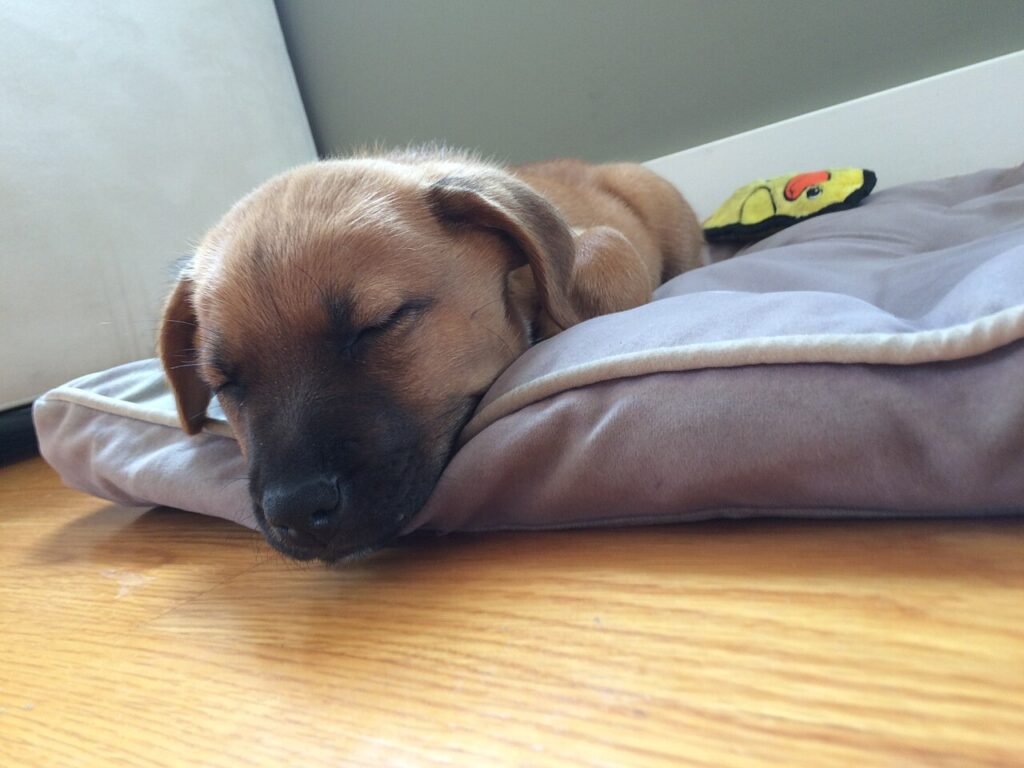
Sleep: eighteen to twenty hours a day is normal. A new puppy sleeps most of the day, in short bursts between wild twenty-minute explosions of energy. Do not mistake the sleep for a problem, and do not mistake the explosions for a puppy that needs more exercise. Let the puppy nap freely, in the crate with the door open, and keep the house calm around nap time. The first week should be deliberately boring: one room at a time, a short list of people, no trips to busy public places, no parade of visitors. The puppy is learning the house; the house does not need an audience yet.
The vet visit: within 48 to 72 hours. Book it before pickup day if you can. The American Kennel Club notes that most breeder contracts call for a vet exam within about three days of the puppy coming home, and many health guarantees depend on it — so this is not a “when we get around to it” appointment, it is the appointment that protects the guarantee. Bring the breeder or shelter paperwork, the vaccination and deworming record, a fresh stool sample so the vet can check for worms, and a written list of your questions. The vet will weigh the puppy, listen to its heart and lungs, check eyes, ears, teeth, skin, and coat, and plan the rest of the vaccine series, which usually runs every three to four weeks until it finishes at or after sixteen weeks. A typical first visit runs $100–$250 in 2026, depending on where you live and what is included — ask the clinic for the price when you book, so it is not a surprise. Our guide to finding the best veterinarian for your dog covers what to look for in a clinic if you do not have one yet.
While you are at the vet, sort out the two pieces of admin that matter most in week one: insurance and the microchip. Start pet insurance from day one, before any condition exists to be called pre-existing — that is the entire point of insuring a puppy rather than an adult dog. And check the microchip: most breeders and shelters chip before the puppy leaves, but the chip is useless until the registration is transferred into your name with your phone number. Confirm the transfer in writing, and check it again a week later. A collar tag gets a lost puppy back from a neighbor; a registered chip gets it back from a shelter.
A realistic first week, for a medium or large puppy, looks like this. The two prices marked verified were checked in November 2026 and must be re-checked at publish; the rest are typical ranges or check-price links, because sizes and brands move the numbers.
| Item | Cost |
|---|---|
| Crate with divider (MidWest iCrate 42″) | $84.99, verified |
| Washable bed | Check price — a basic washable bed typically runs $25–$40 |
| Small bag of the breeder’s food | Check price — typically $15–$30 for a small bag |
| Two stainless steel bowls | Check price — typically $10–$20 for the pair |
| Collar and ID tag | Check price — typically $10–$20 |
| Enzymatic cleaner (Nature’s Miracle Advanced, 32-oz) | $13.57, verified |
| Two or three starter toys, incl. KONG Puppy | Check price — typically $15–$25 for the set |
| Puppy pads (if needed) | Check price — typically $10–$15 a pack |
| First vet visit | Typically $100–$250 |
The buy-before-pickup kit comes to roughly $150–$200 before food and vet. Add the first vet visit and the first week all-in lands at roughly $300–$500 — before insurance, which is a monthly cost from here on. Our breakdown of the costs of dog ownership puts first-year supplies at $200–$500 all-in, and the crate is the biggest single piece of that for most owners — which is another reason to buy the adult size once, with a divider, rather than a small crate now and a large one in six months.
A puppy’s first week is mostly waiting: waiting for it to wake up, waiting for it to need the garden, waiting for it to fall asleep on your foot. The shopping is the easy part, and it is done before the puppy arrives. The routine is the real work, and it is the same routine every day for the first month — same food, same times, same spot in the garden, same calm house. Get that right, and by the second week the puppy is not a Christmas present any more. It is just your dog.