Phone:
(701)814-6992
Physical address:
6296 Donnelly Plaza
Ratkeville, Bahamas.

Phone:
(701)814-6992
Physical address:
6296 Donnelly Plaza
Ratkeville, Bahamas.
Disclosure: Laika’s World is reader-supported. Some links in this post go to retailers like Amazon and Chewy. We don’t earn a commission on them yet, and we never let that shape what we recommend.
A large dog is not a small dog scaled up. A Labrador puppy that will weigh 70 pounds as an adult, a German Shepherd in its prime, and a ten-year-old Mastiff slowing down on the stairs all eat differently — and the bag that suits one of them can quietly cause problems for another. The difference is not marketing. It is growth rate, joint load, and how many calories a big body burns just staying warm and moving around. If you have not settled on a breed yet, our guide to the best dog breed for you can help you choose.
This guide is organised the way a large dog actually lives: puppy, adult, senior. It explains what makes a large-breed food different, how to read a label in sixty seconds, and which foods to buy at each stage — with the prices checked on Chewy, and two honest warnings about the foods that look like a bargain and are not.
Three things, and they matter in this order.
1. Controlled growth for puppies. A large-breed puppy grows fast, and growing too fast is the problem. The skeleton grows quicker than the joints and muscles around it, and that mismatch is linked to orthopedic problems later — hip dysplasia and osteochondrosis among them. Two levers control it: calories and calcium. A large-breed puppy formula is usually a little lower in fat and calories per cup than a small-breed puppy food, and its calcium sits inside a tighter range. The current AAFCO nutrient profiles cap calcium for large-size puppy formulas at 1.8% on a dry-matter basis, against a 2.5% maximum for other puppies, with phosphorus capped at 1.6%. The exact numbers matter less than the label statement that proves the food meets them — see the next section.
2. Joint support for adults and seniors. A 70-pound dog puts roughly twice the load through its joints as a 35-pound dog doing the same walk. That is why large-breed adult and senior foods so often list glucosamine and chondroitin, and why the senior picks below call out their levels. These ingredients support joint health; they do not repair a damaged joint, and no food replaces a vet’s advice when a dog is actually limping.
3. Weight control, all life long. A large dog that carries ten extra pounds is carrying the equivalent of a heavy backpack on every step, every day. Large-breed foods tend to be a little less calorie-dense per cup than all-breed foods, which makes portion control easier — but the bag does not do the work. The feeding table on the back, a measuring cup, and a monthly weigh-in do.
One thing that does not matter as much as the marketing suggests: protein percentage on its own. A 1991 study of Great Dane puppies fed diets at 31.6%, 23.1% and 14.6% protein found that protein level by itself was not the driver of skeletal problems — excess calories and excess calcium were. Do not pick a food by its protein number alone.
You need three lines on the bag, and you can ignore most of the rest.
The nutritional adequacy statement. Small print, usually near the feeding directions. It should say the food is complete and balanced for growth, or for all life stages, “including growth of large size dogs (70 lb. or more as an adult)” — for a puppy — or for adult maintenance, for an adult. AAFCO recognises exactly two nutrient profiles for dogs: growth and reproduction, and adult maintenance. There is no third, and an all-life-stages food is a puppy food. If the statement says “except for growth of large size dogs,” that food is not for a large-breed puppy, whatever the front of the bag says.
How the claim was reached. The statement also tells you this. “Formulated to meet the nutritional levels established by the AAFCO Dog Food Nutrient Profiles” means the recipe was calculated to meet them. “Animal feeding tests using AAFCO procedures substantiate” means the food was also fed to dogs in a trial. Both are acceptable; a feeding trial is the stronger evidence, and it is worth preferring when two foods are otherwise tied.
The guaranteed analysis and the calories. Protein, fat, fibre and moisture percentages tell you what is in the food; the kcal per cup tells you how much of it to feed. A dense food at 400 kcal a cup and a light one at 310 kcal a cup are not interchangeable — the same scoop is a different meal. Always compare foods by cost per day, not cost per bag: divide the bag price by the number of cups in the bag, then multiply by the cups your dog eats a day. A $107 bag that lasts six weeks is cheaper than a $78 bag that lasts four.
Recalls. Before you commit to a brand, check it against the FDA’s pet-food recall database and the brand’s own recall page. A recall in a brand’s past is not automatically a reason to avoid it — what matters is how recent it was, whether it touched the formula you are buying, and whether the company was transparent about it. Do the check once when you choose, and again if you switch formulas.
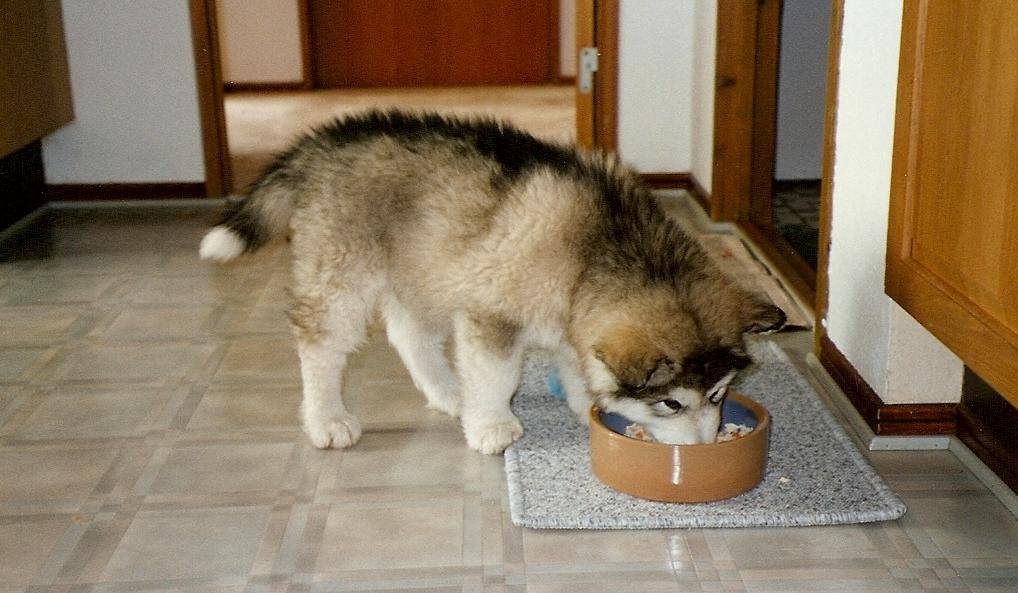
ORIJEN Puppy Large is the premium puppy pick, and the price says so. It is packed with animal ingredients — the brand puts the figure at 85% — and it is formulated to meet the AAFCO profiles for all life stages, including growth of large-size dogs (70 lb. or more as an adult), with calcium and phosphorus kept in the controlled range large-breed puppies need. It comes grain-free and in an Amazing Grains version; either is a legitimate large-breed puppy food, so pick the one your puppy actually eats and tolerates, not the one with the better marketing.
The honest limit is cost. At $106.99 for a 23.5-lb bag, this is roughly $4.56 a pound, and a growing large-breed puppy eats a lot of it. If that price makes you wince, the Wellness pick below is the sensible step down — do not stretch the budget by feeding less than the table says.
Wellness Complete Health Large Breed Puppy is the value alternative to ORIJEN: deboned chicken, brown rice and salmon meal, formulated for large-breed puppies, at a noticeably lower price per pound. The 30-lb bag was $69.98 on Chewy at publish (list price $72.99). It is the pick for the owner who wants a proper large-breed puppy statement on the bag without paying the premium-brand price — and for a puppy with a sensitive stomach, the oatmeal and salmon-meal version is worth trying first.
Purina Pro Plan is the workhorse of this list: widely available, feeding-trial backed, and priced in the middle. The Large Breed Adult formula is a shredded-blend chicken and rice recipe with added probiotics, built for dogs over 50 pounds, and it is the adult pick most owners will find first — in a pet store, at a vet’s office, or on Chewy. At $77.48 for a 34-lb bag, about $2.28 a pound, it is also the cheapest per pound of the kibble picks here, which matters when a 70-pound dog eats four or five cups a day.
If your dog does not do well on chicken, the same line has a Sensitive Skin & Stomach salmon version for large breeds — switch the recipe, not the brand, and transition over a week (see below).
Nutro Ultra Large Breed Adult is built around a trio of proteins — chicken, lamb and salmon — with whole grains, and it is the pick for the owner whose dog gets bored of a single-protein food, or who wants a superfood-style ingredient list without going to the premium tier. It is a solid, widely stocked adult formula, and it is the one pick on this list where the price genuinely varies by store: retailer prices for the 30-lb bag ranged from $86.99 to $95.99 across Target, Petco and independent stores. Petco lists the 30-lb bag at $89.98 (verified Nov 21, 2026), which sits in the middle of that range. That is a reason to compare before you buy, not a reason to avoid it — but do not trust a single store’s price.
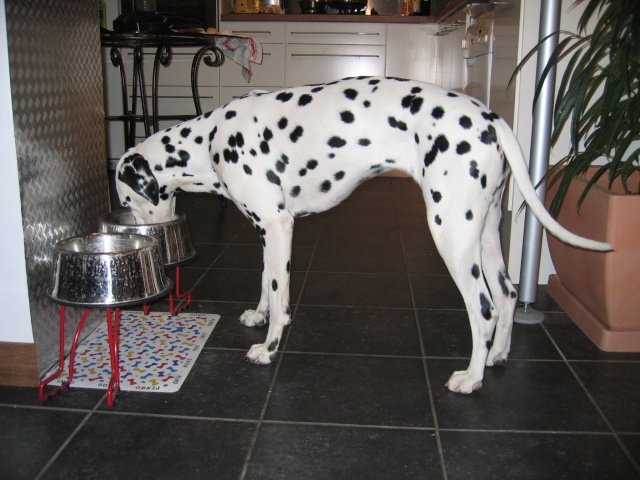
Blue Buffalo Life Protection Large Breed Senior is the value senior pick: deboned chicken and brown rice, with glucosamine and chondroitin for joint health and mobility, formulated for large-breed seniors aged seven and up. It is the cheapest senior pick here per pound, and the one most owners will recognise on the shelf. The large-breed version is for dogs over 60 pounds, and it carries extra glucosamine and chondroitin over the regular senior recipe — that is the difference worth paying for, not the “large breed” words on the front.
Royal Canin Large Aging 8+ — formerly Maxi Aging 8+ — is the most age-targeted food on this list: it is made specifically for large dogs aged eight and older, weighing roughly 56 to 100 pounds. It is the only senior pick here that publishes its glucosamine level, at 743 mg/kg, and it is built around vitality and brain support for the oldest large dogs rather than just joint comfort. That specificity is also its limit: if your dog is seven, or weighs under 56 pounds, this is not the right bag — the Blue Buffalo pick above fits better.
At $109.99 for a 30-lb bag, it is the most expensive kibble here. The publish run verified $109.99 on the Chewy listing itself (Nov 21, 2026); the $128.99 figure seen in one earlier crawl was not the listing’s buy-once price.
A senior dog also spends more time resting than a younger one, so a warm, supportive bed matters — see our guide to the best heated dog beds and self-warming pads for winter 2026.
Fresh food is the question every large-breed owner asks eventually, and the answer is mostly about money and freezer space. Ollie and The Farmer’s Dog both build a plan from a quiz — breed, weight, activity, body condition — and quote a personalised price, so there is no single figure to print. The ranges from 2026 checks are:
Against that, the kibble picks above run roughly $60–$110 a month for a 70-pound adult, depending on the food and how much the dog eats. Fresh food is not nutritionally required — a complete and balanced kibble that meets the AAFCO profiles is a complete diet — but some dogs eat better, or digest better, on fresh food, and some owners simply prefer it. If you go fresh, budget for the freezer space first: a month of food for a big dog is a shelf of your freezer. And if the full-fresh price is too much, a fresh topper on top of kibble — a spoonful or two a day — gives the dog the taste and the variety without the $300 monthly bill. Our breakdown of the costs of dog ownership puts food at $600–$1,200 a year for a large dog on kibble; fresh food can double that, so go in with your eyes open.
Transition over seven to ten days. Mix a quarter new food with three-quarters old for two or three days, then half and half, then three-quarters new, then all new. A sudden switch is the most common cause of an upset stomach in a healthy dog, and it is entirely avoidable.
Measure, do not pour. Use the feeding table on the bag as a starting point, then adjust by what you see: you should be able to feel the ribs under a thin layer of fat, and see a waist from above. Puppies need the table followed more closely — underfeeding a growing large-breed puppy is as much a problem as overfeeding one — so weigh a puppy monthly and ask your vet at each visit whether the growth curve looks right.
Feed adults twice a day, not once. Large and giant breeds are at higher risk of bloat (gastric dilatation-volvulus), where the stomach fills with gas and can twist. Feeding two smaller meals instead of one large one, using a slow-feeder bowl for a dog that inhales food, and avoiding vigorous exercise for an hour before and after meals are the practical steps owners can take. Bloat is an emergency — a swollen belly, retching without bringing anything up, restlessness — and it needs a vet immediately, not a wait-and-see. If your breed is one of the high-risk ones (Great Danes, German Shepherds, Standard Poodles, Mastiffs and similar), talk to your vet about the signs and about preventive options before you ever need them.
A food whose adequacy statement says “except for growth of large size dogs” fed to a large-breed puppy — the front of the bag does not overrule the small print. Any food that will not tell you whether it was formulated or feeding-trial tested. A grain-free food chosen only because it sounds healthier: grain-free is a choice for a dog with a specific problem, not a better food by default, and the FDA has investigated a possible link between certain grain-free diets and heart disease — if your dog is doing well on a grain-inclusive food, there is no reason to switch. And a food bought purely on its protein percentage, or on a single five-star review: protein is one number, and a review is one dog.
Large-breed food is about controlled growth, joint load, and weight — not about a bigger bag. For a puppy, buy a food whose AAFCO statement includes growth of large-size dogs (70 lb. or more as an adult): ORIJEN Puppy Large at $106.99 for 23.5 lb is the premium pick, Wellness Large Breed Puppy at $69.98 for 30 lb is the value alternative. For an adult, Purina Pro Plan Large Breed Adult at $77.48 for 34 lb is the all-rounder, and Nutro Ultra Large Breed Adult at $89.98 for 30 lb (Petco) is the three-protein alternative. For a senior, Blue Buffalo Large Breed Senior at $79.97 for 34 lb is the value pick, and Royal Canin Large Aging 8+ at $109.99 for 30 lb is the one for dogs eight and up. Fresh food from Ollie or The Farmer’s Dog runs roughly $240–$430 a month for a large dog, against $60–$110 on kibble — a real choice, not a requirement. Read the adequacy statement, feed by the table, measure every meal, and ask your vet when anything about your dog’s weight, growth or joints worries you. If you are starting with a new puppy, our new puppy checklist covers the rest of the first week. Our guide to choosing the right dog crate covers sizing and the best crates for 2026. And if you are not sure your dog is at a healthy weight, how to find the best veterinarian for your dog is the place to start.
Sources: AAFCO Dog Food Nutrient Profiles, growth and reproduction (calcium 1.2–1.8% dry matter for large-size puppy formulas, phosphorus 1.0–1.6%), via Amazing Service Dogs, “Large Breed Puppy Food Calcium: Why the Ceiling Matters” (https://amazing-service-dogs.com/large-breed-puppy-food-calcium/) and Purrs McBarkin, “Large Breed and Giant Breed Puppies: Why Calcium, Phosphorus, and Controlled Growth Matter Most” (https://blog.purrsmcbarkin.com/large-breed-puppy-nutrition-calcium-phosphorus/); Merck Veterinary Manual on excess calcium and osteochondrosis in large-breed puppies, as quoted in those sources; 1991 Great Dane protein study, The Journal of Nutrition, as summarised in the Purrs McBarkin source; Chewy listings for ORIJEN Puppy Large ($106.99, 23.5-lb bag), Wellness Large Breed Puppy ($69.98, 30-lb bag), Blue Buffalo Life Protection Large Breed Senior ($79.97, 34-lb bag), Royal Canin Large Aging 8+ ($109.99, 30-lb bag) and Purina Pro Plan Large Breed Adult ($77.48, 34-lb bag), prices verified Nov 21, 2026; Petco listing for Nutro Ultra Large Breed Adult, 30-lb bag ($89.98), verified Nov 21, 2026 (https://www.petco.com/product/nutro-ultra-large-breed-adult-dry-dog-food-30-lbs-1489267); Ollie pricing, Fresh Dog Food Lab 2026 review (https://freshdogfoodlab.com/ollie-review) and The Pricer, “How Much Does Ollie Dog Food Cost?” (https://www.thepricer.org/how-much-does-ollie-dog-food-cost/); The Farmer’s Dog pricing, USA Today, “Is The Farmer’s Dog worth it?” (https://www.usatoday.com/story/shopping/pets/2026/10/29/the-farmers-dog-review/92503312007/) and The Pricer, “How Much Does Farmer’s Dog Cost?” (https://www.thepricer.org/how-much-does-farmers-dog-cost/).